· 3 min read
You Cannot Fall Off the Earth
An October full moon over the sea, a friend's kid asking why the moon does not fall, and Newton's beautiful answer: it does. It falls forever, and keeps missing.
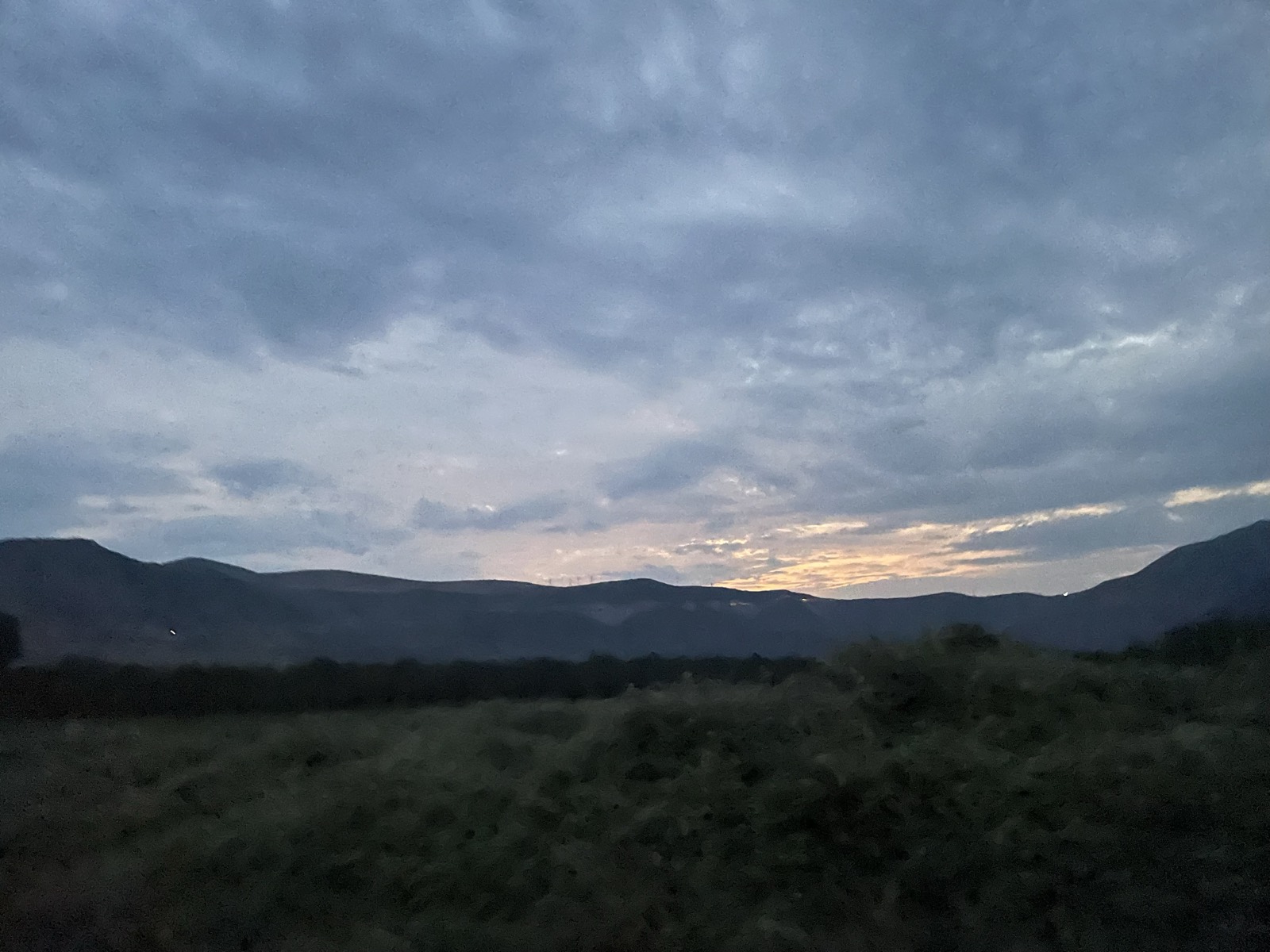
There was a full moon over the sea this week, one of those October moons that comes up the color of honey and makes the whole taverna turn its chairs around.
I was there with friends and their eight year old, who was stacking bread and ignoring the moon entirely until, out of nowhere, in the way of eight year olds, he pointed at it and asked the question that once required a Newton to answer. Why does it not fall on us?
His father said because it is far away. His mother said eat your food. And I, because I have been reading again and eight year olds deserve real answers, said the thing that stopped even the adults chewing.
It is falling. It has been falling the whole time. It just keeps missing.

The kid looked at me the way you look at a man who might be lying, so I did what Newton did in his book, three hundred years ago, with a cannon. Imagine, I told him, you throw a stone from the mountain. It flies a little, curves down, hits the beach. Throw harder, it lands further. Now imagine you could throw it so hard that as it curves down toward the ground, the ground itself, because the Earth is round, curves away underneath it at exactly the same rate. The stone keeps falling, and the beach keeps politely removing itself, forever. The stone never lands. It goes all the way around, and hits you in the back of the head, which delighted him.
That, I said, is the moon. It is not hanging up there. It is dropping toward us continuously, pulled by the same gravity that pulls your bread to the floor, and it is also moving sideways so fast that it endlessly overshoots the fall. Falling and missing, falling and missing, for four and a half billion years. Astronauts float for the same reason, I told him, they are not beyond gravity, they are inside the fall, falling around the Earth together with their whole ship, and the falling, when nothing interrupts it, feels like floating.
He accepted this and returned to the bread. The adults did not. The rest of the table went quiet in the way I have learned means a piece of physics has escaped the laboratory and is loose among the population.
Because it rearranges something, that image. I walked home along the water with the moon on my right, thinking about it. Everything in the sky is in freefall. The moon around the Earth, the Earth around the sun, the sun around the heart of the galaxy, nothing is pinned up, nothing is held by cables, the entire sky is one enormous letting go that never ends. And it does not feel like catastrophe. It feels like a honey-colored evening with bread and friends. Orbit is just the universe's word for a fall that trusts itself.
I have had years when I was fighting to hold every single thing up by hand, white-knuckled, certain that the moment I let go, everything drops. The moon offers a different engineering. Keep your momentum, it says. Let yourself be pulled by what pulls you, fully, without resisting the pull. The combination is not a crash. The combination is the calmest, oldest, most reliable motion in the sky.
Falling with enough forward motion is called flying. Ask the moon. It has been missing the ground for four billion years, and it looked magnificent doing it on Tuesday.
From those days
From the same notebookThe Kid and the MachineRead the opening →